
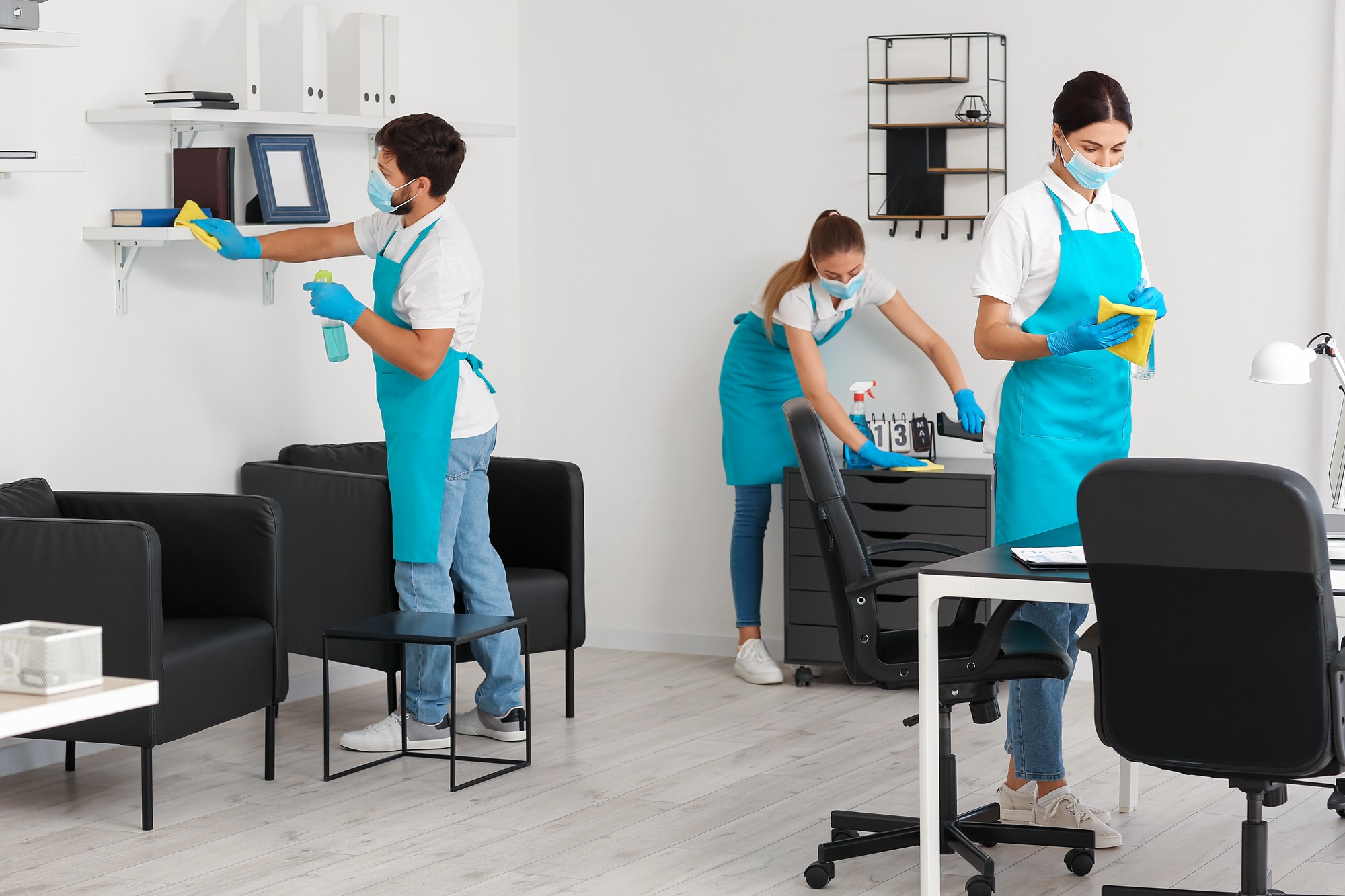
A Surface In A Medical Office Can Look Clean Long Before It’s Actually Safe
Walk into any busy healthcare facility, and everything may appear spotless. The reception desks shine. The waiting rooms are tidy. The exam tables look freshly prepared. Yet pathogens don’t always announce their presence. Many microorganisms can survive on high-touch surfaces long after a patient leaves, creating hidden risks in healthcare environments. That’s why medical office cleaning in Phoenix AZ has evolved far beyond simple appearance-based cleaning. Healthcare cleaning today focuses on infection prevention, patient safety, and reducing opportunities for cross-contamination between visits.
For healthcare facilities seeking dependable support, Health Point Cleaning Solutions offers specialized medical cleaning approaches designed around modern sanitation protocols and healthcare cleaning standards through its medical office cleaning services.
Medical office cleaning addresses pathogen persistence through hospital-grade disinfectants, microfiber systems, room reset routines, electrostatic disinfection, HEPA filtration systems, and targeted sanitation protocols that focus on high-touch points between patient visits to support patient safety and infection prevention.
Why Pathogens Linger Longer Than Many People Realize
Healthcare environments experience constant movement. Patients arrive with varying health concerns. Staff transition rapidly between treatment rooms. Visitors interact with waiting areas, reception desks, and shared spaces.
Research has shown that pathogens can remain viable on certain surfaces for hours or even days, depending on environmental conditions. In medical facilities, this makes routine cleaning programs essential rather than optional.
People often ask: Which surfaces carry the greatest contamination risk between appointments?
The answer usually includes:
- Door handles
- Exam tables
- Bed rails
- Reception desks
- Waiting room armrests
- Treatment room counters
- Shared equipment
- Patient corridors
- Staff spaces
Healthcare cleaning standards recognize that high-touch areas require different cleaning approaches than general office cleaning. Medical clinics, urgent care centers, rehabilitation centers, testing facilities, and doctors’ offices all require targeted attention.
Medical Office Cleaning Requires More Than Visible Cleanliness
The expectations placed on healthcare janitorial services differ dramatically from those of retail cleaning services or standard commercial cleaning.
In healthcare facilities, common mistakes can undermine infection prevention efforts.
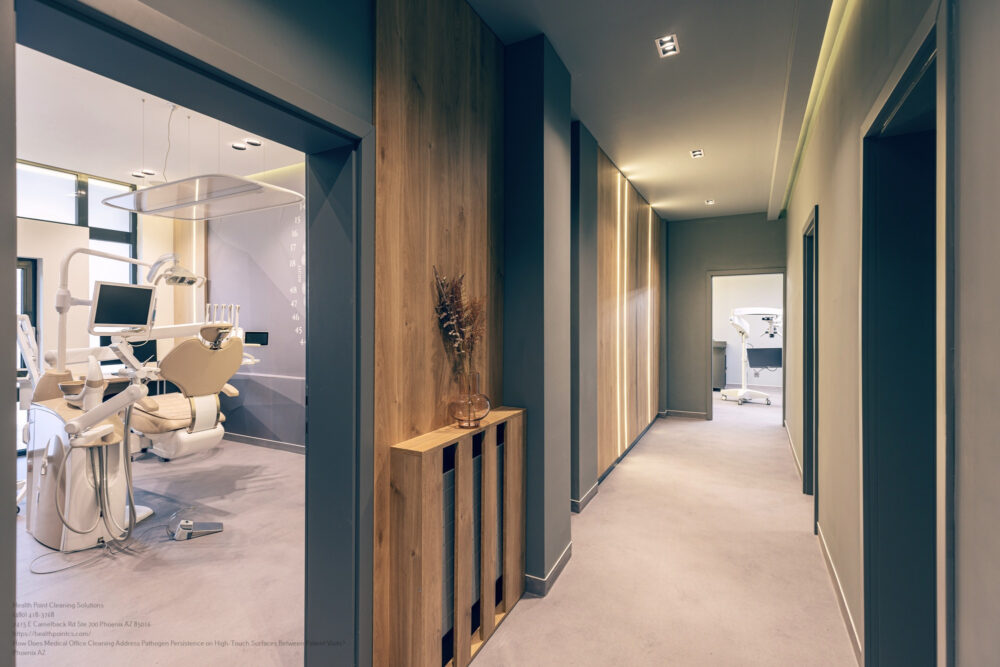
One frequent issue involves relying solely on appearance. Surfaces may seem clean while pathogens remain active.
Another problem occurs when disinfectants aren’t allowed proper dwell time. Hospital-grade disinfectants require specific contact periods to achieve intended effectiveness.
Some organizations also fail to distinguish between deep cleaning and routine maintenance. Deep cleaning serves a valuable role, but daily room reset routines and disinfection services remain critical.
Cross-utilization of supplies can create additional concerns. Using identical tools across waiting areas, patient rooms, and treatment rooms without proper protocols increases contamination risks.
According to CDC guidance, environmental cleaning programs should emphasize proper product selection, staff education, and adherence to established disinfection protocols.
Health Point Cleaning Solutions helps medical facilities avoid these pitfalls by implementing structured sanitation protocols tailored to healthcare environments.
Need Professional Medical Office Cleaning Services?
Contact Health Point Cleaning Solutions today to help protect your patients and staff.
High-Touch Surfaces Demand Targeted Cleaning Approaches
Not every surface requires identical treatment.
High-touch points demand greater frequency and more detailed attention than low-contact areas.
Professional teams often prioritize:
- Exam tables between visits
- Door handles throughout the day
- Reception desks after peak traffic periods
- Waiting rooms during operating hours
- Treatment rooms following each patient encounter
- Administrative spaces according to occupancy patterns
These cleaning programs help address pathogen persistence without disrupting workflow.
In surgical centers and nursing homes, room reset routines become especially important. Each space must return to an established baseline before the next patient interaction.
Medical office cleaning also contributes to indoor air quality through HEPA filtration systems, dust-free methods, and effective debris control.
After all, patient safety extends beyond visible surfaces.
The Role of Advanced Disinfection Technologies
Healthcare environments increasingly utilize technology to strengthen cleaning outcomes.
One growing trend involves electrostatic disinfection. Electrostatic disinfection disperses charged disinfectant particles designed to coat surfaces more uniformly.
Systems such as the Clorox Total 360 Disinfection and Sanitizing System have gained attention for their enhanced coverage in sensitive spaces with multiple touchpoints.
Medical office cleaning in Phoenix AZ providers often integrate these tools alongside traditional cleaning methods rather than replacing them entirely.
Additional technologies may include:
- HEPA filtration systems for reducing airborne particles.
- Microfiber systems that improve contaminant capture.
- Electrostatic disinfection for supplemental coverage.
- Specialized floor care equipment for healthcare-grade cleaning.
The goal isn’t simply innovation for its own sake. The objective remains practical: reducing opportunities for infection transmission.
Why Training Matters As Much As Products
The best disinfecting products in the world won’t compensate for inconsistent execution.
Professional teams working within healthcare environments require extensive education surrounding:
- Clinical protocols
- Virus and illness protocols
- Medical waste handling
- Infection prevention principles
- Surface care requirements
- Proper disinfectant application
- Biohazard cleanup awareness
- Documentation procedures
Healthcare environments demand precision.
Staff members who service medical clinics, dental offices, surgical suites, or rehabilitation centers must understand why different areas require different sanitation protocols.
For example, waiting areas may prioritize customer-facing cleanliness and patient confidence, while treatment rooms require greater emphasis on healthcare cleaning standards and regulatory consistency.
Health Point Cleaning Solutions recognizes that people remain the foundation of effective healthcare cleaning.
Lessons Learned from Real-World Healthcare Settings
Medical facilities don’t operate under identical conditions.
Urgent care centers may experience unpredictable patient volumes. Testing facilities can encounter seasonal surges. Doctors’ offices may cycle through appointments rapidly.
What works in one environment may not work elsewhere.
Professional cleaning teams often develop customized cleaning programs that reflect:
- Facility layout
- Patient demographics
- Operating schedules
- Types of services provided
- Regulatory expectations
- Risk tolerance levels
For example, patient rooms containing vulnerable populations may require increased disinfection services.
Similarly, treatment rooms used for invasive procedures may require more stringent room reset procedures.
A practical takeaway for facility administrators is to review cleaning programs regularly rather than assume previous procedures remain sufficient indefinitely.
Healthcare evolves continuously. Cleaning programs should evolve alongside it.
Key Strategies Healthcare Facilities Should Remember
Several principles consistently emerge across successful healthcare cleaning programs.
Routine cleaning supports consistency.
Deep cleaning supplements routine maintenance rather than replacing it.
High-touch surfaces deserve prioritized attention.
Microfiber systems improve cleaning efficiency.
Hospital-grade disinfectants require proper application procedures.
Electrostatic disinfection may enhance coverage when integrated thoughtfully.
HEPA filtration systems contribute to indoor air quality objectives.
Medical office cleaning in Phoenix AZ programs function best when built around documented sanitation protocols, trained personnel, and patient-centered thinking.
Ultimately, infection prevention depends upon thousands of small actions performed consistently over time.
Why Health Point Cleaning Solutions is a Smart Choice
We at Health Point Cleaning Solutions provide the best solutions to our customers. We understand that healthcare facilities require more than traditional commercial cleaning. Our professional teams focus on patient safety, healthcare cleaning standards, and reducing contamination risks within sensitive spaces.
We take pride in delivering dependable cleaning programs tailored to the unique operational needs of medical facilities, doctors’ offices, treatment rooms, waiting areas, and other healthcare environments. Our commitment to quality, consistency, and customer service enables us to support healthier outcomes for staff, patients, and visitors alike.
We showcase our excellent services through detailed sanitation protocols, advanced cleaning approaches, and ongoing attention to infection prevention practices. We strive to become a trusted partner that healthcare organizations can depend on every day.
Contact Health Point Cleaning Solutions for expert medical office cleaning services designed to support safer healthcare environments. Protect your facility, your staff, and your patients with specialized cleaning programs built around excellence in medical office cleaning in Phoenix AZ.
Need Professional Medical Office Cleaning Services?
Contact Health Point Cleaning Solutions today to help protect your patients and staff.