

A Building’s Layout, Daily Activity, and Cleaning Demands Should Shape Its Maintenance Plan
A cleaning schedule that works for a quiet office may fall short in a busy medical building, retail property, or multi-tenant workplace. The right frequency and scope depend on how each area is used, how many people move through it, which surfaces require attention and the conditions that affect cleanliness throughout the day.
Businesses considering janitorial services in Phoenix AZ should evaluate these factors before setting a routine. Health Point Cleaning Solutions provides janitorial services for commercial facilities and offers a relevant starting point for businesses assessing their ongoing cleaning needs.
How Does the Building’s Purpose Affect Its Cleaning Requirements?
The type of commercial facility is one of the first conditions to evaluate because different activities create different cleaning demands. An office building may experience concentrated use around workstations, meeting rooms, reception areas, and shared kitchens. A retail property may have heavier foot traffic near entrances, checkout counters, fitting rooms, and customer service desks. Industrial or mixed-use facilities may also have areas where dust, debris, equipment use, or operational processes influence the cleaning requirements.
The distinction matters because a schedule should reflect the building’s actual activities rather than rely on a standard list of tasks. For example, a conference room used for several meetings each day may need more frequent surface cleaning than a room reserved for occasional appointments. A breakroom shared by several departments may require checks throughout operating hours, particularly around countertops, appliance handles, cabinets, and waste bins. Facility managers should identify how each space functions before deciding how often it needs attention.
The building’s occupants also influence the plan. Employees, customers, contractors, visitors, and delivery personnel may use different entrances and shared spaces. A property that welcomes the public throughout the day usually has different cleaning priorities from one occupied mainly by a small, consistent team. Understanding these patterns helps the janitorial team assign suitable cleaning frequencies without spending time on low-use areas at the expense of busier spaces.
Which Areas Experience the Most Foot Traffic and Surface Contact?
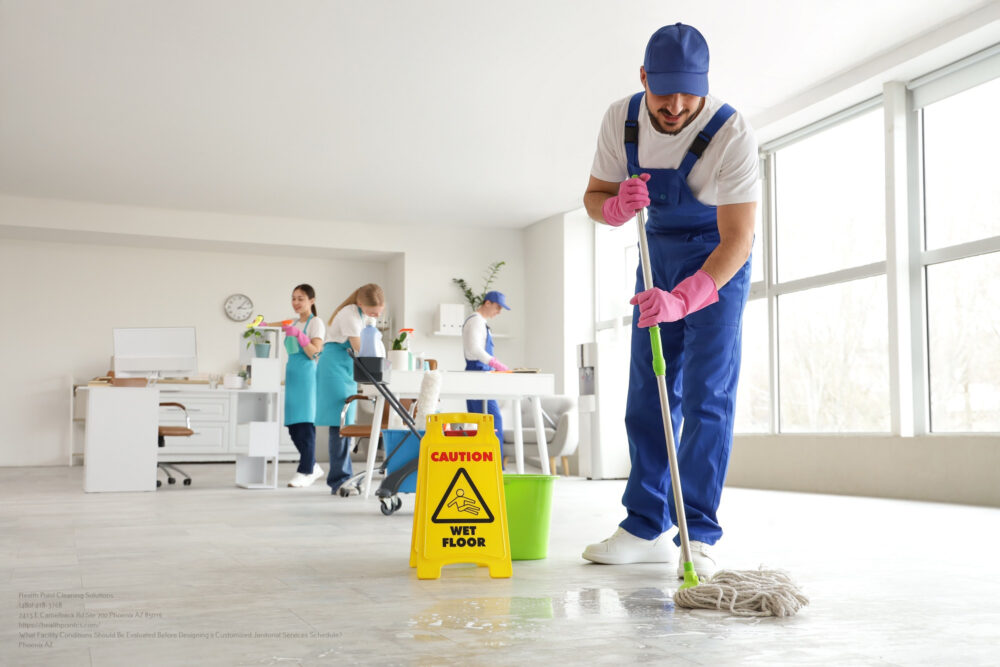
Foot traffic affects how quickly dirt and debris accumulate, but the busiest areas are not always the only areas that deserve attention. Entrances, reception spaces, corridors, stairwells, elevators, and shared restrooms often experience repeated use. In Phoenix, outdoor dust can also enter through doors and collect on surface floors, window ledges, and other exposed areas. Properties in Goodyear, Scottsdale, and other Valley communities may need to account for local dust conditions and building-specific traffic patterns.
A useful assessment distinguishes between visible soil and frequent surface contact. Entrance flooring may collect grit and tracked-in debris, making dust mopping and appropriate floor care important. Shared counters, door handles, elevator buttons, and drinking fountain controls may appear clean while still receiving frequent hand contact. Their cleaning frequency should reflect how often people use them, not simply whether marks are visible. The CDC’s guidance on cleaning and disinfecting facilities also recommends regularly cleaning high-touch surfaces, including door handles, stair rails, elevator buttons, counters, and restroom fixtures.
Managers can identify priority areas by observing the building at different times of day. Morning arrivals, lunch periods, shift changes, and closing hours may reveal traffic patterns that are not obvious during a brief walkthrough. This information can help determine where routine cleaning is sufficient and where additional attention from a day porter may be useful. A schedule based on actual occupancy is generally more practical than assigning identical cleaning intervals to every room.
Need Reliable Janitorial Services?
Contact Health Point Cleaning Solutions today for a expert cleaning plan for busy commercial buildings.
What Flooring, Furnishings, and Finishes Need Special Consideration?
Flooring materials affect both the cleaning method and the time required to maintain an area. Carpeted spaces may need regular vacuuming, with more frequent attention near entrances and heavily used walkways. Hard surface floors may require dust mopping to remove loose debris before damp cleaning. The appropriate method also depends on the flooring material, its finish, the manufacturer’s care recommendations, and the type of soil commonly present.
A facility assessment should identify transitions between carpet, tile, vinyl, and other floor coverings. These transitions can collect dirt, while unsuitable products or tools may affect certain finishes. Managers should also consider whether furniture, equipment, display units, or narrow walkways make some areas harder to reach. If removal of staples from carpets or other small debris is regularly necessary, that task should be included in the agreed scope rather than assumed to be part of every routine visit.
Other surfaces require attention based on their material and use. Glass partitions and entrance doors may show fingerprints quickly. At the same time, countertops, cabinets, appliance exteriors, and drinking fountains may collect spills or residue. Dusting partitions, cleaning visible fingerprints, wiping countertops, and polishing a drinking fountain can be appropriate tasks in some facilities, but their frequency should depend on condition and use. A customized plan should distinguish daily upkeep from periodic detail cleaning so that less frequent tasks are not overlooked.
How Do Restroom and Breakroom Conditions Change the Schedule?
Restrooms and breakrooms often require more frequent inspections than low-use rooms because they involve shared surfaces, moisture, waste, and repeated contact. Restroom assessments should consider the number of fixtures, the volume of daily use, ventilation, available supplies, and the condition of floors and basins. Toilet seats, flush controls, faucets, dispensers, restroom floors, and walls around basins may require different cleaning frequencies depending on traffic and visible soiling.
The condition of the fixtures also affects the time needed for proper maintenance. Splash marks around sinks, fingerprints on dispenser covers, and residue on mirrors can accumulate between scheduled visits. Cleaning staff may need to polish mirrors, clean towel cabinet covers, stock towels, wipe fixture fronts, and check trash receptacles as part of an agreed restroom routine. These tasks should be defined clearly so that restocking and appearance checks do not replace necessary cleaning.
Breakrooms create a different set of demands. Coffee rings on counters, food residue around appliances, spills inside shared refrigerators, and fingerprints on cabinet fronts can develop as employees use the space. The schedule should account for appliance exteriors, cabinet surfaces, tables, sinks, and waste areas, while clarifying whether employees or janitorial staff are responsible for personal dishes and stored food. Clear boundaries prevent misunderstandings and help the cleaning team focus on the tasks included in the service agreement.
When Should Cleaning Take Place During Business Hours?
Operating hours are a practical consideration because cleaning activity must fit around the people and work taking place inside the building. Some tasks are easier to complete after employees and customers have left, while others need attention during the day. Vacuuming a busy reception area during peak arrival times, for example, may interrupt normal operations. However, cleaning a spill in a corridor should not be postponed until the evening if it poses an immediate slip hazard.
Flexible scheduling can divide work into suitable time periods. Routine tasks such as vacuuming carpeting, emptying trash receptacles, and cleaning shared surfaces may be assigned to evening visits. At the same time, restroom checks, spill response, and upkeep of busy common areas may require daytime coverage. A day porter can support these needs where the building’s activity justifies an on-site or scheduled daytime presence. The appropriate arrangement depends on occupancy, access, noise restrictions, security procedures, and the client’s operating schedule.
The assessment should also identify restricted rooms, sensitive equipment, security-controlled areas, and times when cleaning staff can safely enter. Some facilities may require advance coordination before certain rooms are serviced. Managers should communicate these restrictions when the schedule is designed, rather than expecting the janitorial team to resolve access problems during routine visits. This helps establish a workable plan that supports both cleaning quality and daily operations.
Which Building Conditions Could Increase Cleaning Time or Frequency?
Some conditions create additional work even when the building has relatively low occupancy. Construction or renovation activity can introduce dust and debris into nearby spaces, while seasonal weather may increase the amount of dirt tracked indoors. Leaks, recurring spills, poor waste management, and inadequate storage can also affect how long an area stays clean. These conditions should be considered separately from ordinary daily use because they may require temporary changes to the schedule.
The building’s layout can add further demands. Large floor areas, multiple entrances, long corridors, several restroom blocks, and rooms spread across different levels increase the distance staff must cover. Furniture density and obstructed surfaces can also slow routine cleaning. A facility with several separate wings may need a different staffing and task sequence from a compact office with the same approximate floor area.
Managers should also consider the building’s current condition. Established residue, neglected corners, heavily soiled flooring, or accumulated dust may require an initial level of cleaning beyond routine maintenance. Once the property reaches an appropriate baseline, recurring visits can focus on maintaining that condition. Treating initial detail work and ongoing janitorial duties as separate requirements makes the schedule easier to define and evaluate.
How Should Managers Turn the Assessment Into a Practical Schedule?
Once the facility conditions have been reviewed, managers can organize the findings into a task plan. Each area should have a defined scope, frequency, and responsible party. The plan should distinguish between daily cleaning, periodic tasks, and work triggered by specific events, such as spills or unusual occupancy. This prevents vague expectations such as keeping the entire building clean from becoming the only measure of service quality.
A practical assessment can cover five core considerations:
- Area and purpose: Identify each room, its function, and who uses it.
- Traffic and contact: Record busy periods, frequently touched surfaces, and areas where soil accumulates.
- Materials and access: Note flooring types, furnishings, restricted rooms, and cleaning limitations.
- Task frequency: Separate routine cleaning from periodic detail work and daytime response needs.
- Responsibilities and review: Clarify client duties, janitorial tasks, access arrangements, and performance review.
The schedule should remain adjustable because building use can change. A franchise owner operating several locations, for example, may need consistent service standards while allowing each site to account for differences in layout, customer volume, and operating hours. Managers should review recurring complaints, missed tasks, supply usage, and changing occupancy to determine whether the original plan still fits. The purpose is not to automatically increase cleaning frequency, but to direct time and resources toward the conditions that genuinely require attention.
A Better Schedule Begins With the Building, Not a Standard Checklist
An effective janitorial schedule reflects the way a facility operates. Its purpose, traffic patterns, flooring, shared amenities, access restrictions, and changing conditions all influence which tasks are needed and when they should take place. A plan built around these details is more likely to provide consistent results than a generic schedule applied to every commercial property.
Health Point Cleaning Solutions provides janitorial services for commercial properties and can be contacted to discuss a cleaning arrangement suited to a facility’s requirements. Businesses evaluating janitorial services in Phoenix AZ can use a detailed review of their building conditions as the starting point for a practical conversation about cleaning priorities, service frequency, and ongoing maintenance.
Need Reliable Janitorial Services?
Contact Health Point Cleaning Solutions today for a expert cleaning plan for busy commercial buildings.